- June 9, 2025
Sam Altman Enters The UK With His Eye-scanning Identification Verification Company
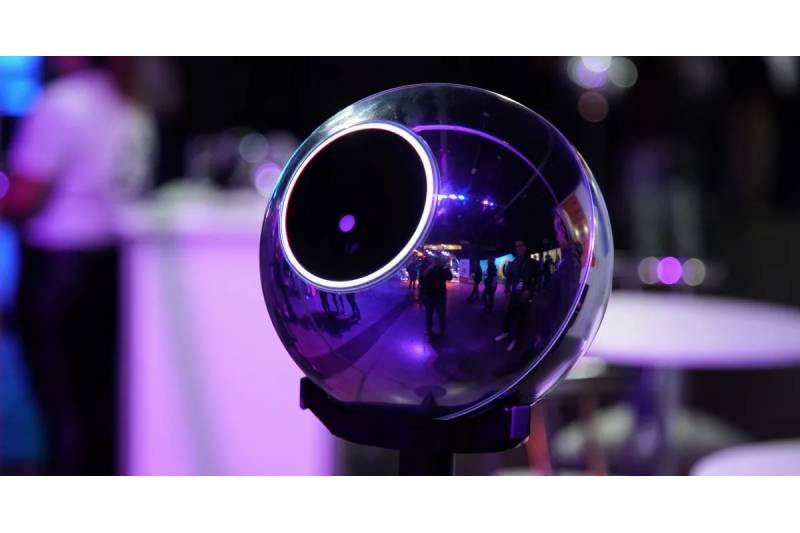
This week marks the launch of World, the biometric identification verification initiative that OpenAI CEO Sam Altman co-founded, in the United Kingdom.
The company will launch in London on Thursday and plans to expand to a number of other major U.K. cities in the upcoming months, including Manchester, Birmingham, Cardiff, Belfast, and Glasgow. The enterprise employs a spherical eye-scanning equipment called the Orb to scan people’s eyes.
Through the use of its Orb gadget, the initiative seeks to verify human identification and stop the fraudulent misuse of AI systems, such as deepfakes.
In order to confirm that a person is a human and not an artificial intelligence (AI), it first scans their face and iris before generating a special code.
A person can use an anonymous identify called World ID to log into different apps after creating their iris code and receiving a portion of World’s WLD cryptocurrency. At the moment, it functions with programs like Reddit, Discord, and Minecraft.
From “scientific endeavor” to actuality
“As the threat of AI to defraud various services — from banking to online gaming — grows, the project is seeing significant demand from both enterprise users and governments,” Adrian Ludwig, chief architect of Tools for Humanity, a key contributor to World, told reporters during a call.
“The concept is no longer merely a theoretical one. He added that World is currently moving “from a science project to a real network,” stating that it’s something that’s real and impacts people on a daily basis.
Austin, Atlanta, Los Angeles, Nashville, Miami, and San Francisco are among the six flagship retail locations the enterprise just opened in the United States. Ludwig stated that the goal for the upcoming months is to “increase the number of people who can be verified by an order of magnitude.”
There have been worries about Altman’s World’s potential impact on user privacy ever since it was first introduced as “Worldcoin” in 2021. According to the startup, these issues are resolved by encrypting the biometric information gathered and making sure the original data is erased.
Furthermore, World’s verification technology performs individual identification checks via a decentralized network of users’ handsets as opposed to the cloud.
However, in a network with billions of users, such as Facebook or TikTok, for instance, this becomes more difficult. World now has 13 million verified users, and it intends to increase that number.
Ludwig contends that because all processing and storage are done locally on a user’s device, World is a scalable network; third-party providers merely manage the infrastructure needed to verify an individual’s uniqueness.
Schemes for digital identification
Ludwig claims that as technology advances, it will become increasingly simpler for emerging artificial intelligence systems to get beyond established verification techniques like face recognition and CAPTCHA bot defense.
As identity systems shift from physical to digital, he sees World filling a relevant need. In an effort to replace paper identification cards, governments are investigating digital ID programs.
But these efforts haven’t been flawless up to this point.
India’s Aadhaar is one prominent example of a digital identity system. Despite being widely adopted, the program has also drawn criticism for its purported worsening of social inequalities among Indians and its lack of adequate security.
Ludwig told the report, “We’re starting to see governments now more interested in how we can use this as a mechanism to improve our identity infrastructure.” “Governments are interested in mechanisms to detect and minimize fraud.”
The technologist went on to say that World has been discussing their identity verification solution with a number of regulators, including the Information Commissioner’s Office, which is in charge of data protection in the United Kingdom.
Ludwig told the report, “We’ve been talking to regulators a lot.” In general, many people have asked how we can ensure that this works. How can privacy be safeguarded? Do we face hazards if we participate in this?
“We’ve been able to answer all of those questions,” he continued. “It’s been a long time since someone asked a question for which we had no response.”