- October 14, 2025
US-China Trade Tensions Flare as New Port Fees Take Effect
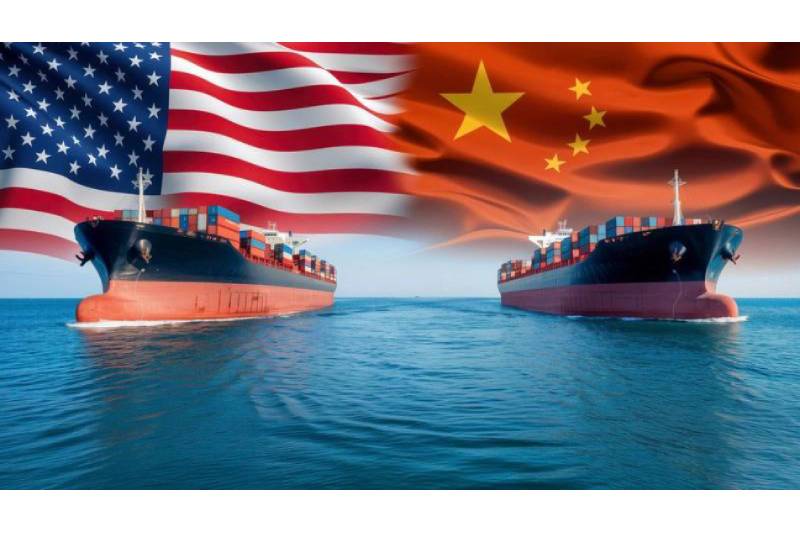
As trade tensions between the two largest economies in the world rise, the US and China will begin imposing new port fees on each other’s ships on Tuesday.
China says that its levies, which apply to US-owned, operated, built, or registered vessels but not Chinese-made ships, are intended to protect the nation’s shipping sector from “discriminatory” actions.
It is a reaction to US levies on Chinese vessels, which Washington claims are intended to assist US maritime firms.
Last week, Beijing announced the tariffs along with steps to tighten restrictions on its exports of rare earth elements. In response, US President Donald Trump threatened to impose an extra 100% tariff on China.
New US taxes on imported wood, kitchen cabinets, and upholstered furniture—many of which are sourced from China—also went into force on Tuesday.
In an effort to reduce trade tensions, US Treasury Secretary Scott Bessent stated on Monday that Trump and Chinese President Xi Jinping are still scheduled to meet in South Korea in late October.
“The 100% tariff is not necessary. Despite this declaration last week, the relationship is going well. We’ll see where it goes now that lines of contact have reopened,” Bessent stated.
“China maintains a steady stance. A spokesman for the Chinese trade ministry stated on Tuesday, “If there’s a fight, we’ll fight to the end; if there’s a talk, the door is open.”
“The United States cannot demand negotiations while enforcing further restrictive restrictions through intimidation and threats. They released a statement saying, “This is not the proper way to engage with China.”
According to Chinese state media, a maritime transportation agreement between the two nations was broken by US taxes on Chinese ships.
According to Chinese official media CCTV, US-affiliated ships berthing at Chinese ports now pay 400 yuan (£42; $56) per net tonne as payback.
The port fees levied by Washington closely correspond to the duties. Additionally, ships run by US companies and those in which a US company owns at least a 25% stake will be subject to them.
According to state broadcaster CCTV, the taxes would increase annually until they reach 1,120 yuan per tonne in April 2028.
According to freight expert Claire Chong, ships transporting dry bulk goods like coal and other raw materials may have to pay up to $3 million in port fees starting today.
According to her estimations, some of the largest ships that transport close to 200,000 tons of dry bulk may be required to pay fees exceeding $10 million by 2028.
According to Ms. Chong of shipbroker Thurlestone Shipping, these fees add up to “significant” expenditures for the sector.
According to her, the exemption for Chinese-built ships, which make up about half of the world’s dry bulk fleet, may lessen the effects of the increased port fees.
Beijing further escalated relations with Washington on Tuesday by adding five US firms of South Korean shipbuilder Hanwha Ocean to its penalty list.
Even if Washington and Beijing agreed to a tariff truce earlier this year, the most recent actions are still being taken.
The two parties had decided to remove triple-digit tariffs on each other’s products in May. It had increased the likelihood that their trading would stop.
As a result, US goods entering China are subject to a 10% duty, while US duties on Chinese imports have increased by 30% since the beginning of the year.