- July 18, 2025
How Android Smartphones Were Turned Into Seismic Warning Devices
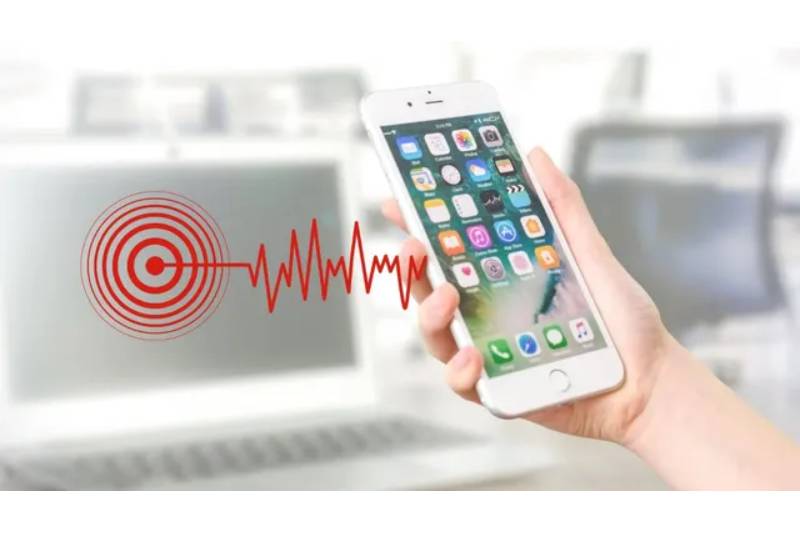
There’s a chance that your Android phone has displayed an odd warning if you reside in an area that experiences earthquakes. Not one that requests authorization to distribute private data or possible spyware, but something much more dangerous: You have one or two minutes to evacuate to a safer area since there is an earthquake close.
The Android Earthquake Alert (AEA) system, which began in the United States in 2020 and has since spread throughout other countries, is activated by default on the majority of Android phones. Additionally, Google published a paper in Science today that explains the system’s operation, how the business has improved it, and what it has observed in its initial years of use—including the factors that led to a few false alarms.
Changing things up
Accelerometers are tiny electronics used in smartphones that allow them to detect changes in motion. They are able to perform tricks like calculating your step count because of this. The accelerometer shouldn’t be picking up any noticeable motion, though, if your phone is resting peacefully on a table. However, your phone’s accelerometer may detect vibrations from everything from you walking across the room to a truck passing outside. As may earthquake tremors, which are frequently less subtle.
Google has developed a system that includes a way to distinguish between the two. Using that resolve to warn people in advance of potentially harmful seismic waves so they have time to take action is part of it.
Your phone will be among the first to detect the earthquake’s trembling if you are in close proximity to the epicenter, and an alert won’t be of much use to you. But, since the vibrations your phone detects travel through the Earth’s crust at a slower rate than the low-latency signals that transmit information on the Internet—some of which travel at the speed of light—it might be able to assist others. This implies that the first shaken phones can be used to set off a system that will send out a warning that may reach other phones just seconds or even minutes before damaging seismic waves occur.
The secret, of course, is to only sound the alarm in the event of a real earthquake and not when a truck is driving by. The sheer number of Android phones sold is crucial in this case. Events that aren’t picked up by many phones in the same area can be ignored by AEA as a first pass. However, we also have a good understanding of the shaking patterns caused by earthquakes. As the earthquake develops, multiple waves may be formed at varying strengths, move at varying speeds, and induce different kinds of ground motion.
In order to determine whether the pattern observed in phones’ accelerometers is consistent with the model of earthquakes and seismic wave propagation, the researchers behind AEA also included a model. Only when there is extensive phone activity that resembles the pattern anticipated during an earthquake does it sound an alarm.
Increasing Consciousness
In practical terms, AEA is distributed as part of the core Android software, and is set to on by default, so it is active in most Android phones. It starts monitoring when the phone has been stationary for a little while, checking for acceleration data that’s consistent with the P or S waves produced by earthquakes. If it gets a match, it forwards the information along with some rough location data (to preserve privacy) to Google servers. Software running on those servers then performs the positional analysis to see if the waves are widespread enough to have been triggered by an earthquake.After then, software on those servers does the positional analysis to determine whether the waves are sufficiently widespread to have been caused by an earthquake.
If so, the size and location are estimated, and the ground motion that will be felt at various places is estimated using that knowledge. With that information, AEA issues one of two alerts: “be aware” or “take action.” Similar to a regular Android notification, the “be aware” notice is given to those farther away from the epicenter and plays a unique sound. The “take action” alert, on the other hand, will display one of two phrases in the relevant language “Protect yourself” or “Drop, cover, and hold on.” It occupies the entire screen, plays a noticeable noise, and disregards any do-not-disturb settings.
The alert only notifies the user that an earthquake has occurred and provides them with the opportunity to learn more about the event if, for some reason, it reaches the phone after the seismic waves would have.
The system sent 1,279 events as of the end of March last year, with the highest one taking place in Türkiye. The events ranged in size from 1.9 to 7.8. The service has improved over time due to software improvements; for example, the error in magnitude predictions has significantly decreased. Among these were advancements in earthquake modeling that took into account local variables in various parts of the world, both in terms of building construction and rock structure. Others were far more pragmatic, including making sure the notifications didn’t vibrate the phone, which would render them ineffective for obtaining information that would improve estimations of location and magnitude.
The system is also quite quick. It took almost 12 seconds for phones on land to begin receiving the first seismic waves from an event that occurred 40 kilometers offshore in the Philippines in 2023. About six seconds later, alerts began to sound, giving up to 15 seconds’ notice to those who would be most shaken. Warnings might have been given much more than a minute before the shaking began for the larger incident in Turkey.
In total, more than one-third of those who could have been alerted claim to have gotten one prior to the tremors. About 25% say they got it during the sharking, and another 25% say they felt it right after the tremor.
Broad-based service
Only three of the approximately 1,300 events that set off the alarms were false positives. One of those was brought on by an alert from another system that caused many phones to vibrate; this should be quite simple to fix in software. Both of the other two were triggered by thunderstorms, in which intense thunder produced extensive vibrations that were concentrated in one place. The researchers improved their model of acoustic occurrences as a result, which should stop a recurrence of this kind of incident.
Even while several nations had already developed systems that used information from seismographic networks to send out alerts, the AEA expanded this service, allowing 2.5 billion individuals to receive alerts in 98 countries. Approximately 18 million people receive one of the 60 alerts that the system typically sends out each month.
It’s not terrible for a system that uses sensors that are almost free when a person buys a phone. I hope it’s one of Google’s more enduring offerings.